Oculoplastic · Lacrimal · Orbital
Beyond blepharoplasty and ptosis, Mr Sultan's fellowship training covers the full range of oculoplastic, lacrimal and orbital conditions - from brow position to watery eyes, eyelid lumps and complex reconstruction following tumour removal.
Available at Kelsall Surgical Centre, Cheshire, and iSIGHT Clinic, Southport · GMC 7271868
Conditions We Treat
Oculoplastic surgery covers a wide range of conditions affecting the eyelids, brow and surrounding tissue. Broadly, they fall into three groups.
Where the eyelid itself is turned the wrong way, or sits too low, affecting comfort, vision or eye health.
Softening the signs of ageing around the eyes, sometimes purely cosmetic and sometimes restoring visual field.
Assessment and removal of eyelid lumps and lesions, from everyday cysts to lesions needing careful histological review.
Brow
A heavy or descended eyebrow - brow ptosis - can make the upper eyelid look hooded even when eyelid skin itself is largely normal. Surgeons judge brow position against a fixed bony landmark: the orbital rim, the bony ridge that forms the upper edge of the eye socket. When the brow sits comfortably above the rim, its position is considered normal; when it descends to or below the rim, that's brow ptosis.
A brow lift repositions the eyebrow to a more youthful height above the rim, opening up the eye area. It's frequently combined with upper blepharoplasty where both brow descent and excess eyelid skin are contributing to a heavy appearance.
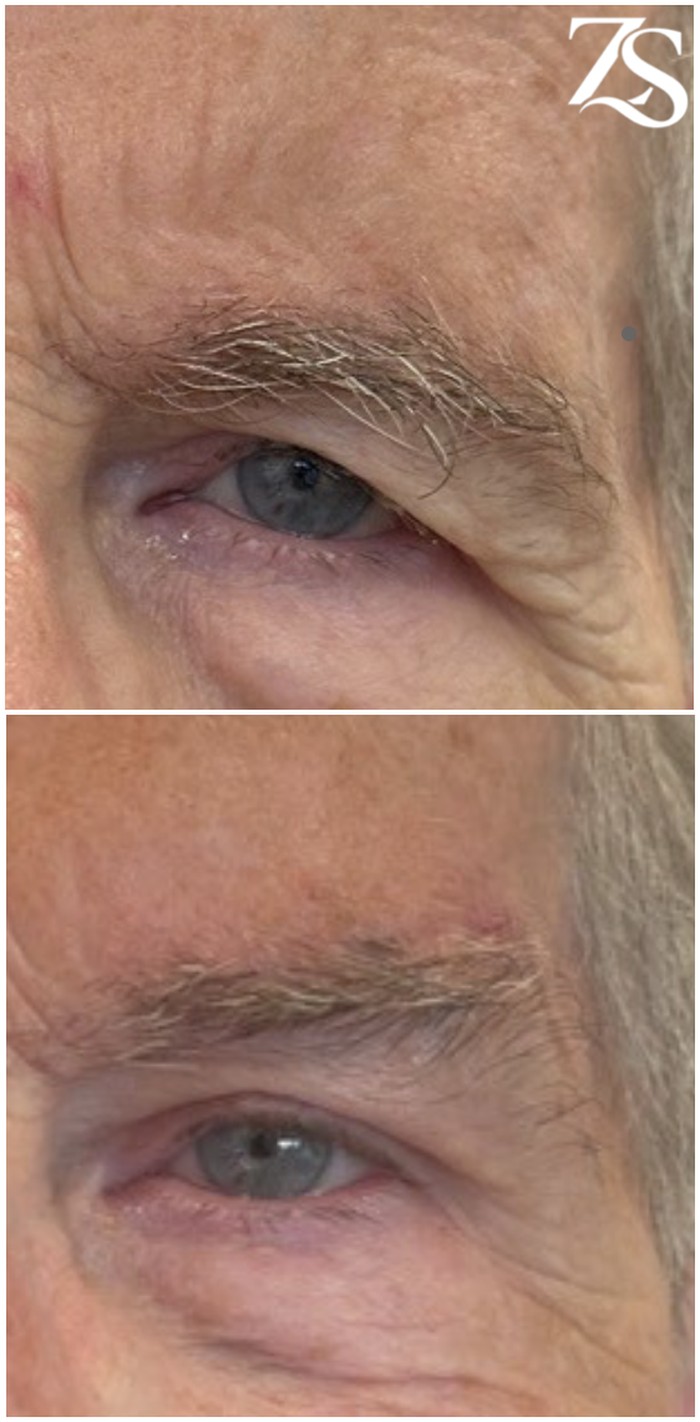
Click to enlarge. Individual results vary.
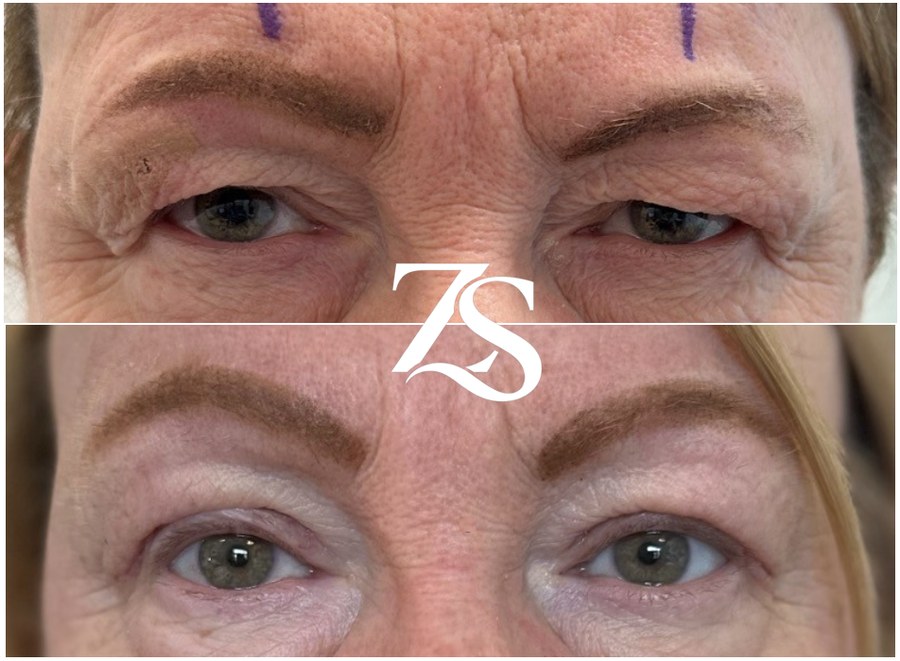
Investigation and surgical treatment of a persistently watery eye, including blocked tear duct surgery (DCR) to restore normal tear drainage.
Reconstruction following trauma, tumour removal or previous surgery, drawing on Mr Sultan's subspecialty training in reconstructive peri-ocular techniques.
Eyelid tumours & reconstruction →Mr Sultan can also advise on thyroid eye disease (Graves' orbitopathy), which affects the muscles and fat around the eyes and can cause lid retraction, bulging or double vision. This condition is complex and multidisciplinary, and Mr Sultan primarily manages it within his NHS practice, working alongside endocrinology colleagues.
What To Expect
Admission, final consent and marking of the surgical site while you are sitting upright, so eyelid and brow position are planned with gravity and your natural expression in mind.
Most oculoplastic procedures are performed under local anaesthetic, with sedation available for anxious patients. Surgery is typically completed within thirty minutes to two hours, depending on complexity.
A short period of observation before you're discharged home the same day, with clear written aftercare instructions and a contact number for any concerns.
A review appointment to check healing, remove any sutures if needed, and confirm the result is progressing as expected.
Why It Matters
Mr Sultan holds a substantive NHS consultant post at a busy tertiary referral unit, where he regularly manages some of the most demanding peri-ocular reconstructions performed in the region, working closely alongside colleagues in ocular oncology on complex referred cases. That depth of experience with complex, high-stakes anatomy directly informs the precision and caution he brings to more routine brow, lacrimal and eyelid procedures.
More about Mr Sultan's training →
Costs vary between Kelsall Surgical Centre and iSIGHT Clinic, and depend on your specific procedure. After your consultation you'll receive a clear, itemised quote before you decide whether to go ahead. No surprises on the day. Sedation options can also be discussed for patients who feel nervous about surgery.
Frequently Asked
Sometimes a heavy brow, rather than excess eyelid skin, is the main cause of a tired appearance. Mr Sultan assesses brow position separately from eyelid skin during consultation to recommend the most effective - and often more conservative - combination of treatment.
Watering can result from a blocked tear duct, eyelid malposition such as ectropion, or dry eye triggering reflex tearing. Investigation identifies the cause before treatment is recommended.
Most eyelid lumps are benign, such as cysts or styes, but any new, changing or persistent lesion should be assessed by a specialist to rule out skin cancer, particularly given the delicate anatomy of the eyelid.
Book a consultation and Mr Sultan will guide you through the right assessment.